
Non-Owner SR-22 After OWI — Wisconsin
Free to compare
Why You Need SR-22 Filing Without Owning a Vehicle
Your license was revoked after an OWI conviction in Wisconsin. You sold your car, or never owned one to begin with. The Wisconsin Department of Transportation still requires SR-22 filing for three years to reinstate your operating privilege. This creates a confusing structural reality: how do you maintain insurance when you have nothing to insure?
Non-owner SR-22 policies exist specifically for this situation. They provide liability coverage when you drive someone else's vehicle — a borrowed car, a rental, or a company vehicle — and satisfy Wisconsin's SR-22 filing requirement without requiring you to own or register a vehicle. The policy covers you as a driver, not a specific car. Carriers file the SR-22 certificate electronically with WisDOT the same day you purchase coverage.
“Non-owner SR-22 policies cost $35–$65/mo in Wisconsin because you're buying liability coverage only — no collision, no comprehensive, just proof of financial responsibility.”

Get Back to a Fair Rate in Wisconsin After a DUI
Get My Wisconsin DUI Insurance Quote$35–$65/mo
Non-Owner SR-22 Premium Wisconsin
Non-owner policies cost significantly less than standard auto insurance because they exclude collision and comprehensive coverage. You're buying state minimum liability only, with the SR-22 filing attached. Actual rates depend on age, county, and OWI count.
Carrier rate filings for Wisconsin non-owner SR-22, 2025
What Non-Owner SR-22 Actually Covers
A non-owner SR-22 policy provides bodily injury and property damage liability coverage at Wisconsin's minimum limits: $25,000 per person, $50,000 per accident for bodily injury, and $10,000 for property damage. It covers damages you cause while driving a vehicle you do not own. It does not cover damage to the vehicle you are driving — that falls to the vehicle owner's policy.
The policy includes uninsured motorist coverage, which Wisconsin requires on all auto policies. If you are hit by an uninsured driver while operating a borrowed vehicle, your non-owner policy covers your medical bills up to the bodily injury limits. The SR-22 filing itself is not insurance — it is a certificate your carrier submits to WisDOT proving you maintain continuous liability coverage.
Non-owner policies explicitly exclude vehicles you own, vehicles registered in your household, and vehicles you use regularly for business purposes. If you later purchase a vehicle, you must convert to a standard policy and notify your carrier immediately. Driving a vehicle you own under a non-owner policy voids coverage.
Wisconsin carriers deny non-owner applications if you have registered vehicles in your name. WisDOT cross-checks registration records electronically — the policy must match your actual ownership status.

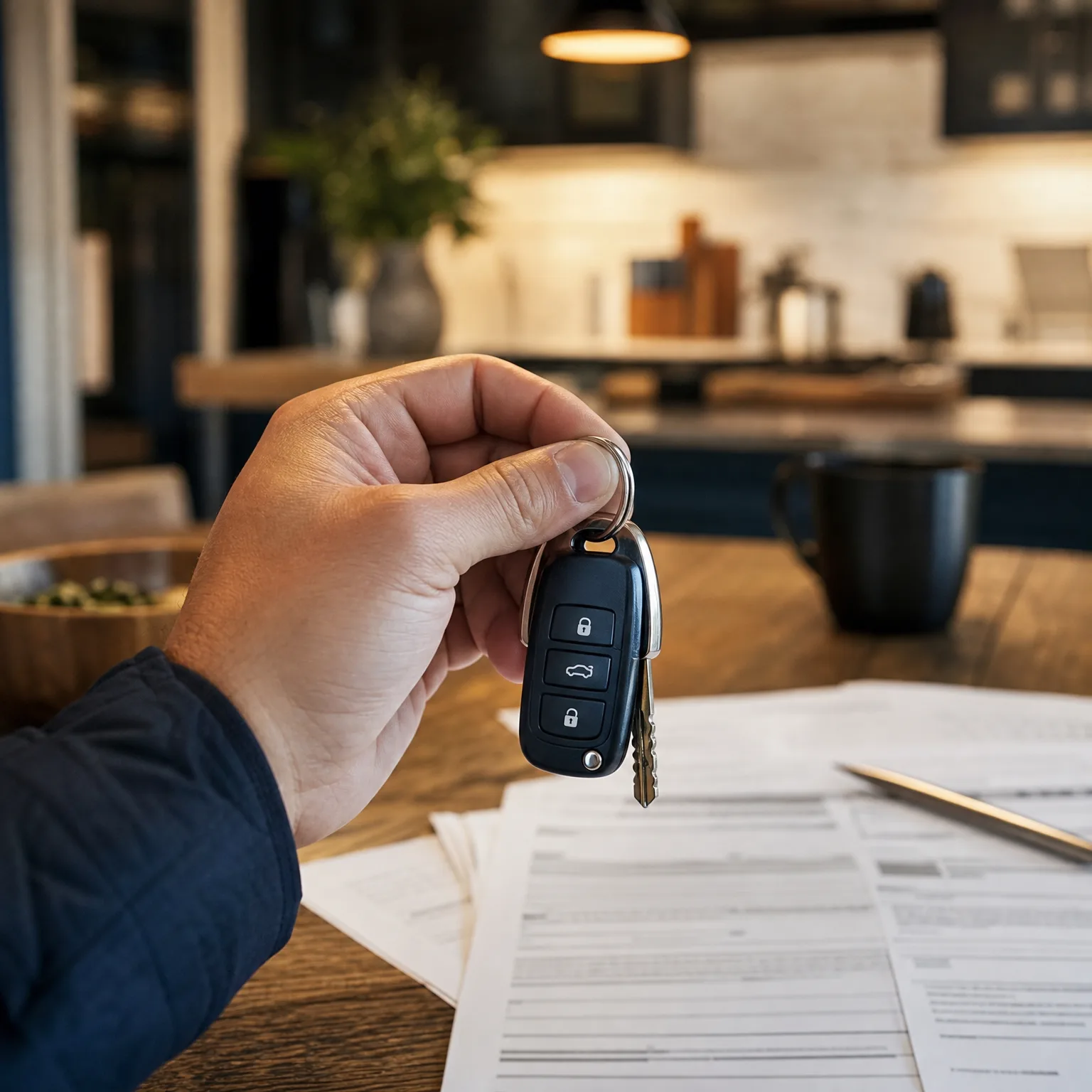


How SR-22 Filing Works With Non-Owner Policies
When you purchase a non-owner policy, your carrier submits the SR-22 certificate to WisDOT electronically. Wisconsin's Division of Motor Vehicles receives the filing within one business day. The certificate confirms you maintain liability coverage meeting state minimums. WisDOT tracks your SR-22 status continuously for three years from the conviction date — not the filing date.
If your policy lapses or cancels for any reason, your carrier is required to notify WisDOT immediately. Wisconsin suspends your operating privilege automatically upon receiving a lapse notice. There is no grace period. You must purchase a new policy and file a new SR-22 certificate the same day to avoid suspension. The three-year SR-22 clock does not reset for lapses, but you face a $60 reinstatement fee and potential additional suspension time.
You cannot cancel your non-owner SR-22 policy until WisDOT confirms your three-year filing period is complete. Even if you do not drive during that time, the policy must remain active. Letting coverage lapse restarts the suspension and reinstatement process. Most carriers send lapse warnings 10–15 days before cancellation for non-payment, giving you a narrow window to avoid suspension.
3 years
Wisconsin SR-22 Filing Period OWI
Wisconsin requires continuous SR-22 filing for three years following OWI conviction under Wis. Stat. § 343.10. The period begins on your conviction date, not your reinstatement date. If you wait six months to file SR-22 and reinstate, you still owe three full years from conviction.
Wis. Stat. § 343.10

Non-Owner Policies and Occupational License Eligibility
Wisconsin allows drivers to apply for an Occupational License during their revocation period. The Occupational License permits driving for work, school, medical appointments, church, and alcohol/drug treatment programs within court-defined hours. Non-owner SR-22 policies satisfy the insurance requirement for Occupational License applications.
When you petition the circuit court for an Occupational License, you must submit proof of SR-22 filing along with your application. A non-owner policy fulfills this requirement as long as the SR-22 certificate is on file with WisDOT. The court reviews your employment documentation, proposed driving schedule, and insurance proof before issuing the license. Approval typically takes 2–4 weeks after the court hearing. Your non-owner policy remains active throughout the Occupational License period and continues through your full reinstatement.
Compare Non-Owner SR-22 Rates in Your County
Non-owner SR-22 rates vary by county due to population density, uninsured driver rates, and claims frequency. Milwaukee County rates run $10–$15/mo higher than rural counties like Washburn or Sawyer. Carriers also adjust rates based on time since your OWI conviction — drivers two years post-conviction see rates 20–30% lower than drivers filing immediately after revocation.
Request quotes from at least three carriers. Progressive, Geico, and Dairyland offer the broadest Wisconsin coverage and the fastest SR-22 filing. Specify that you need non-owner coverage with SR-22 filing when requesting quotes — standard auto insurance agents often misunderstand the product and quote standard policies instead. Confirm the carrier will file the SR-22 certificate electronically with WisDOT within 24 hours of policy purchase. Compare both the monthly premium and the SR-22 filing fee, which ranges $15–$35 depending on carrier.
Carriers Writing Non-Owner SR-22 in Wisconsin
Progressive writes non-owner SR-22 policies statewide and processes applications online. Quotes are instant. Rates for OWI drivers typically range $40–$70/mo depending on county and time since conviction. Progressive files SR-22 certificates electronically within 24 hours of policy purchase. Geico also writes non-owner SR-22 in Wisconsin with comparable rates, though approval depends on driving history review. Geico requires phone or agent application for SR-22 filers; online quotes are not available for non-owner policies with filing requirements.
Dairyland specializes in high-risk and SR-22 filings and writes non-owner policies for Wisconsin OWI drivers. Rates are slightly higher — $50–$80/mo — but approval rates are higher for drivers with multiple OWI convictions or recent violations. The General and GAINSCO also write non-owner SR-22 policies in Wisconsin and accept applications from drivers other carriers deny. Processing time is typically two business days for SR-22 filing after policy purchase.
Get Your Free Quote
Get My Wisconsin DUI Insurance QuoteFrequently Asked Questions
Can I get SR-22 insurance without owning a car in Wisconsin?
Yes. Non-owner SR-22 policies provide liability coverage when you drive vehicles you do not own and satisfy Wisconsin's SR-22 filing requirement. Progressive, Geico, Dairyland, The General, and GAINSCO write non-owner SR-22 policies in Wisconsin. Rates typically range $35–$65/mo.
How much does non-owner SR-22 insurance cost after an OWI in Wisconsin?
Non-owner SR-22 policies in Wisconsin cost $35–$65/mo for drivers with one OWI conviction. Rates increase to $50–$80/mo for drivers with multiple OWI convictions or recent violations. Milwaukee County rates run $10–$15/mo higher than rural counties. The SR-22 filing fee adds $15–$35 to your first payment.
Do I need non-owner insurance if I never drive?
Yes, if Wisconsin requires SR-22 filing to reinstate your license. The SR-22 certificate proves continuous liability coverage for three years after OWI conviction, regardless of whether you actually drive. Letting your non-owner policy lapse triggers automatic suspension and a $60 reinstatement fee.
Can I use a non-owner policy to get an Occupational License in Wisconsin?
Yes. Non-owner SR-22 policies satisfy the insurance requirement for Wisconsin Occupational License applications. When you petition the circuit court, submit your SR-22 certificate as proof of coverage. The policy remains active during your Occupational License period and through full reinstatement.
What happens if my non-owner SR-22 policy lapses in Wisconsin?
WisDOT suspends your operating privilege immediately when your carrier reports a lapse. There is no grace period. You must purchase a new policy and file a new SR-22 certificate the same day to avoid suspension. You will owe a $60 reinstatement fee even if the lapse lasted only one day.
Does a non-owner policy cover rental cars in Wisconsin?
Yes. Non-owner policies provide liability coverage when you drive rental vehicles. The policy covers bodily injury and property damage you cause, but does not cover damage to the rental car itself — rental companies offer separate collision damage waivers for that. Your non-owner SR-22 policy meets Wisconsin's proof of insurance requirement when renting.
Can I switch from non-owner to standard insurance without losing my SR-22 filing?
Yes, but you must coordinate the switch carefully. Purchase your standard policy first, confirm the carrier files a new SR-22 certificate with WisDOT, then cancel your non-owner policy. Any gap in SR-22 filing — even one day — triggers suspension. Most carriers process SR-22 transfers within 24 hours if both policies are active simultaneously for one day.