
OWI Insurance Costs — Wisconsin
Free to compare
Why Your Premium Jumped After OWI Conviction
Your Wisconsin OWI conviction triggered three simultaneous insurance mandates that standard carriers won't touch: SR-22 certificate filing for 3 years minimum, ignition interlock device installation per Wis. Stat. § 343.301, and immediate reclassification to non-standard tier. Most drivers expect the premium increase but miss that all three requirements must be satisfied before reinstatement — failing any one of them keeps your suspension active even if you pay the $200 reinstatement fee.
Wisconsin DOT requires the SR-22 on file before they'll consider reinstatement, but the SR-22 itself isn't insurance — it's a certificate your carrier files electronically proving you carry at least state minimum liability coverage. The premium spike comes from the non-standard tier placement, not the SR-22 filing fee. Carriers assess OWI as high-risk driver status regardless of your prior driving record, and that reclassification is what doubles or triples your monthly cost.
“Wisconsin counts your SR-22 period from conviction date, not filing date — file six months late and you still have only 2.5 years left, not 3 years forward.”

Get Back to a Fair Rate in Wisconsin After a DUI
Get My Wisconsin DUI Insurance Quote$180–$320/mo
Wisconsin OWI Premium Range
Non-standard tier monthly cost after first OWI conviction for state minimum liability plus SR-22 filing. Clean-record drivers in Wisconsin typically pay $85–$140/mo for the same coverage limits. Premium reflects carrier risk assessment of OWI conviction, not the SR-22 administrative filing itself.
Carrier rate filings, Wisconsin Department of Insurance
What Wisconsin Minimum Coverage Actually Costs You
Wisconsin state minimum liability is $25,000 per person bodily injury, $50,000 per accident bodily injury, and $10,000 property damage (25/50/10 in shorthand). That's the floor your SR-22 must certify. Uninsured motorist coverage is also required in Wisconsin, adding another $15–$30/mo to your baseline premium depending on carrier.
After OWI conviction, non-standard carriers writing SR-22 policies in Wisconsin — Bristol West, Dairyland, GAINSCO, The General, Progressive, Geico, National General — price state minimum coverage between $180–$320/mo. That range reflects your county, age, and whether you own the vehicle or need non-owner SR-22. Milwaukee County and Dane County residents pay the higher end due to claims density; rural counties trend lower.
Carriers won't quote you until the IID requirement is satisfied or waived. Wisconsin's absolute sobriety restriction applies during the entire SR-22 period — any alcohol detection on the IID during that window extends your filing period and may trigger probation violation charges. The IID monthly lease cost ($75–$125/mo) stacks on top of your insurance premium, and most drivers forget to budget for both when calculating affordability.
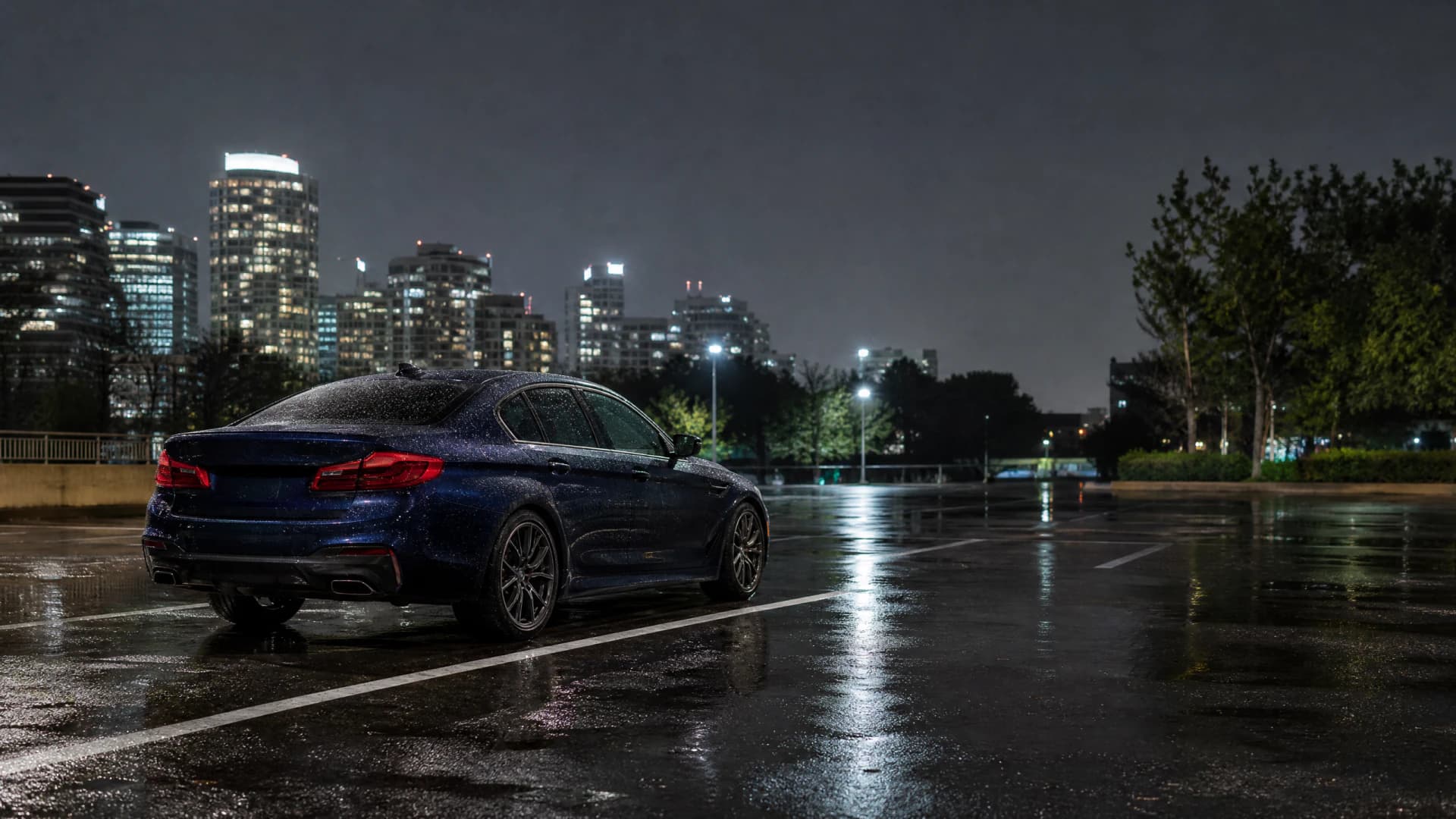
Wisconsin requires IID installation before SR-22 carriers will bind coverage. If you skip the IID thinking you'll handle it later, no carrier will issue the SR-22 certificate DOT needs for reinstatement.






Non-Owner SR-22 When You Don't Own a Vehicle
If you sold your vehicle after the OWI conviction or never owned one, Wisconsin still requires SR-22 filing for reinstatement. Non-owner SR-22 policies cover you as a driver in any borrowed or rented vehicle but don't insure a specific car. These policies cost $25–$50/mo less than standard SR-22 because the carrier's risk exposure is lower — you're not driving daily.
Non-owner SR-22 satisfies Wisconsin DOT's proof-of-insurance mandate for reinstatement even if you have no intention of driving regularly. Many suspended drivers use non-owner SR-22 to meet the filing requirement while relying on public transit or rideshare during the suspension period. Dairyland, GAINSCO, Geico, Progressive, The General, and USAA all write non-owner SR-22 in Wisconsin.
The non-owner policy must carry at least Wisconsin state minimum liability limits (25/50/10) plus uninsured motorist coverage. If you later purchase a vehicle during the SR-22 period, you must notify your carrier immediately to convert the non-owner policy to a standard policy — driving a vehicle you own under a non-owner policy voids coverage and triggers an SR-26 cancellation filing to DOT.
3 years
Wisconsin SR-22 Filing Period
Measured from OWI conviction date, not SR-22 filing date, per Wis. Stat. § 344.62. Clock resets completely if coverage lapses at any point during the 3-year window. Second OWI within 10 years extends filing period and adds enhanced IID requirements.
Wis. Stat. § 344.62
Occupational License Insurance Requirements
Wisconsin offers an Occupational License (OL) during your suspension period if you meet court eligibility criteria. The OL allows driving for work, school, medical appointments, church, and alcohol/drug treatment programs within court-defined hours — maximum 12 hours per day, 60 hours per week per Wis. Stat. § 343.10. SR-22 filing is mandatory for OL approval regardless of suspension type.
You apply for the OL through circuit court, not DOT. The court evaluates your petition, sets your allowed driving hours and purposes, then issues an order. You take that court order to a Wisconsin DMV service center to receive the physical occupational license document. The entire process requires SR-22 already on file — DOT won't issue the OL document without proof of SR-22 coverage active in their system. Many applicants miss this sequencing and have their OL delayed because they filed for the court order before securing SR-22.
First-offense OWI has a 30-day hard suspension before OL eligibility; second or subsequent OWI within 10 years requires 90 days hard suspension per Wis. Stat. § 343.10(5)(b). During the hard period you cannot drive at all, and SR-22 filing during that window doesn't shorten it. Budget for 1–2 months of non-driving time before the OL becomes available, and expect $150–$200 in court fees on top of your SR-22 insurance cost.
Which Carriers Write OWI Policies in Wisconsin
Seven carriers actively write SR-22 policies for Wisconsin OWI convictions in the non-standard tier: Bristol West, Dairyland, GAINSCO, Geico, National General, Progressive, and The General. State Farm writes SR-22 but typically declines OWI risks in Wisconsin. Standard-tier carriers (Allstate, American Family, Auto-Owners, Erie, Farmers) won't quote OWI convictions until the SR-22 period ends and you've maintained 3 years of violation-free driving.
Rate variance between non-standard carriers is significant — quotes for identical coverage can differ by $80–$120/mo depending on your county and age. Dairyland and The General specialize in high-risk driver markets and often quote the lowest premiums for OWI filers in Wisconsin. Progressive and Geico offer online quoting for SR-22 but may route OWI cases to underwriting review, delaying policy binding by 3–5 business days. Bristol West and GAINSCO require broker contact and don't offer direct online binding.
All seven carriers file SR-22 certificates electronically to Wisconsin DOT within 24–48 hours of policy binding. You don't handle the SR-22 paperwork yourself — the carrier sends it directly. Verify with your carrier that the SR-22 filing is complete before paying your reinstatement fee at DMV; DOT won't process reinstatement if their system shows no active SR-22 on file under your driver license number.
Get Coverage That Meets Wisconsin Filing Requirements
Compare SR-22 quotes from carriers writing Wisconsin OWI policies now. The site's tool pulls quotes from Dairyland, GAINSCO, Progressive, Geico, and The General based on your county and violation date. Quotes include SR-22 filing at no additional administrative fee — the premium you see is the full monthly cost. Enter your OWI conviction date, your county, and whether you need non-owner or standard coverage to see carrier options available in your tier.
SR-22 Filing Period and What Resets the Clock
Most drivers assume the 3-year SR-22 period starts when they file, but Wisconsin counts from the OWI conviction date per Wis. Stat. § 344.62. If your conviction was six months ago and you file SR-22 today, you have 2.5 years remaining — not 3 years forward from today. DOT tracks the conviction timestamp, and your carrier's SR-22 certificate references that date when filing electronically.
If your policy lapses or cancels for non-payment during the 3-year window, your carrier sends an SR-26 cancellation notice to DOT within 10 days. DOT suspends your license immediately upon receiving that notice, and the entire 3-year SR-22 clock resets from the date you refile with a new carrier. A single missed payment can add years to your filing requirement if you don't catch it within the 10-day carrier notification window.
Get Your Free Quote
Get My Wisconsin DUI Insurance QuoteFrequently Asked Questions
Do I need SR-22 insurance if my license is suspended for OWI in Wisconsin?
Yes. Wisconsin requires SR-22 certificate filing for all OWI-related suspensions, measured for 3 years from your conviction date per Wis. Stat. § 344.62. The SR-22 proves you carry at least state minimum liability coverage and uninsured motorist coverage. DOT will not reinstate your license or issue an Occupational License without an active SR-22 on file in their system.
How much does SR-22 insurance cost after an OWI in Wisconsin?
Monthly premiums for SR-22 coverage after Wisconsin OWI conviction range $180–$320/mo for state minimum liability. Clean-record drivers pay $85–$140/mo for the same coverage. The premium increase reflects non-standard tier placement after OWI conviction, not the SR-22 filing itself. Non-owner SR-22 policies cost $25–$50/mo less because you're not insuring a specific vehicle.
Can I get an Occupational License in Wisconsin without SR-22 insurance?
No. Wisconsin DOT requires SR-22 filing before issuing the physical Occupational License document, even after the court grants your OL petition. The circuit court order authorizing restricted driving does not substitute for SR-22 proof of insurance. You must have SR-22 active in DOT's system before visiting a DMV service center to receive your OL card.
What happens if my SR-22 insurance lapses in Wisconsin?
Your carrier sends an SR-26 cancellation notice to Wisconsin DOT within 10 days of policy lapse. DOT suspends your license immediately upon receiving that notice, and your entire 3-year SR-22 filing period resets from the date you refile with a new carrier. A single missed payment can extend your SR-22 requirement by years if not corrected within the 10-day notification window.
Does Wisconsin require ignition interlock for all OWI convictions?
Yes. Wisconsin mandates ignition interlock device (IID) installation for most OWI-related reinstatements per Wis. Stat. § 343.301, including first offenses in many cases. IID installation is required before SR-22 carriers will bind coverage. The device lease costs $75–$125/mo and stacks on top of your insurance premium. Absolute sobriety (0.00 BAC) applies during the entire IID and SR-22 period.
How long is the hard suspension period before I can get an Occupational License in Wisconsin?
First OWI conviction in Wisconsin has a 30-day hard suspension before Occupational License eligibility. Second or subsequent OWI within 10 years requires 90 days hard suspension per Wis. Stat. § 343.10(5)(b). During the hard period you cannot drive at all, and SR-22 filing during that window does not shorten it. Budget 1–2 months of non-driving time before the OL becomes available.
Can I use non-owner SR-22 if I don't own a car in Wisconsin?
Yes. Non-owner SR-22 satisfies Wisconsin DOT's proof-of-insurance mandate for reinstatement even if you don't own a vehicle. The policy covers you as a driver in borrowed or rented vehicles and costs $25–$50/mo less than standard SR-22. Dairyland, GAINSCO, Geico, Progressive, The General, and USAA write non-owner SR-22 in Wisconsin.