
OWI Insurance — Wisconsin
Free to compare
The Two-Track Revocation Reality
You were convicted of Operating While Intoxicated in Wisconsin. The court imposed a sentence. Thirty days later, you received a second notice from Wisconsin DOT Division of Motor Vehicles stating your operating privilege is revoked for 6 to 9 months. You now face two separate revocation actions: one administrative (triggered by the arrest itself under Wis. Stat. § 343.305 implied consent law) and one judicial (imposed by the court upon conviction under Wis. Stat. § 346.65). Both carry independent timelines, both require separate reinstatement processes, and both demand SR-22 certificate of financial responsibility filing before you can petition for an Occupational License.
This article maps the exact procedural sequence from OWI conviction through SR-22 filing, Occupational License petition, ignition interlock installation, and final reinstatement. Wisconsin's structure is unusually complex because the administrative and judicial tracks run in parallel—missing a requirement on either track blocks your entire path forward. The steps below reflect current Wisconsin DOT requirements and circuit court petition procedures as of this writing.
“Wisconsin circuit courts will not grant an Occupational License unless you submit proof of SR-22 filing with your petition.”

Get Back to a Fair Rate in Wisconsin After a DUI
Get My Wisconsin DUI Insurance Quote6-9 months
First OWI Revocation Period
Wisconsin imposes a 6-month revocation for first OWI conviction (Wis. Stat. § 343.30(1q)(b)1). If your blood alcohol concentration was 0.15 or higher, or if you refused chemical testing, the period extends to 9 months. This is the judicial revocation period; any administrative suspension runs concurrently.
Wis. Stat. § 343.30(1q)(b)1
SR-22 Filing Must Precede Occupational License Petition
You cannot petition for an Occupational License until you hold an active SR-22 certificate on file with Wisconsin DOT. The SR-22 is a continuous insurance certification filed electronically by your carrier directly to the state. It confirms you carry at minimum Wisconsin's liability limits: $25,000 bodily injury per person, $50,000 bodily injury per accident, and $10,000 property damage. Uninsured motorist coverage is also required in Wisconsin, though the state does not monitor this through SR-22 filing.
The SR-22 requirement for OWI is universal in Wisconsin regardless of offense count. First-time offenders, repeat offenders, and drivers with aggravated BAC levels all face the same 3-year SR-22 filing period measured from the date your operating privilege is reinstated—not from conviction date, not from filing date. If your SR-22 lapses at any point during those 3 years because you cancel your policy, miss a payment, or switch carriers without maintaining continuous coverage, Wisconsin DOT receives electronic notice within 24 hours and immediately re-suspends your operating privilege. You then owe a new $60 reinstatement fee per suspension action, which stacks if multiple revocations were in effect.
Obtain SR-22 coverage before filing your Occupational License petition with the circuit court. Most Wisconsin carriers writing high-risk auto policies can issue SR-22 certificates same-day or next-business-day. Non-owner SR-22 policies are available if you do not own a vehicle but need to satisfy the filing requirement to petition for restricted driving privileges. Expect monthly premiums between $95 and $185 for non-owner SR-22, and $140 to $280 for owner-operator SR-22 depending on your county, age, and prior insurance history.

Wisconsin circuit courts will not grant an Occupational License unless you submit proof of SR-22 filing with your petition. The SR-22 certificate must be active and on file with DOT at the time of your court hearing.






Ignition Interlock Device Requirement
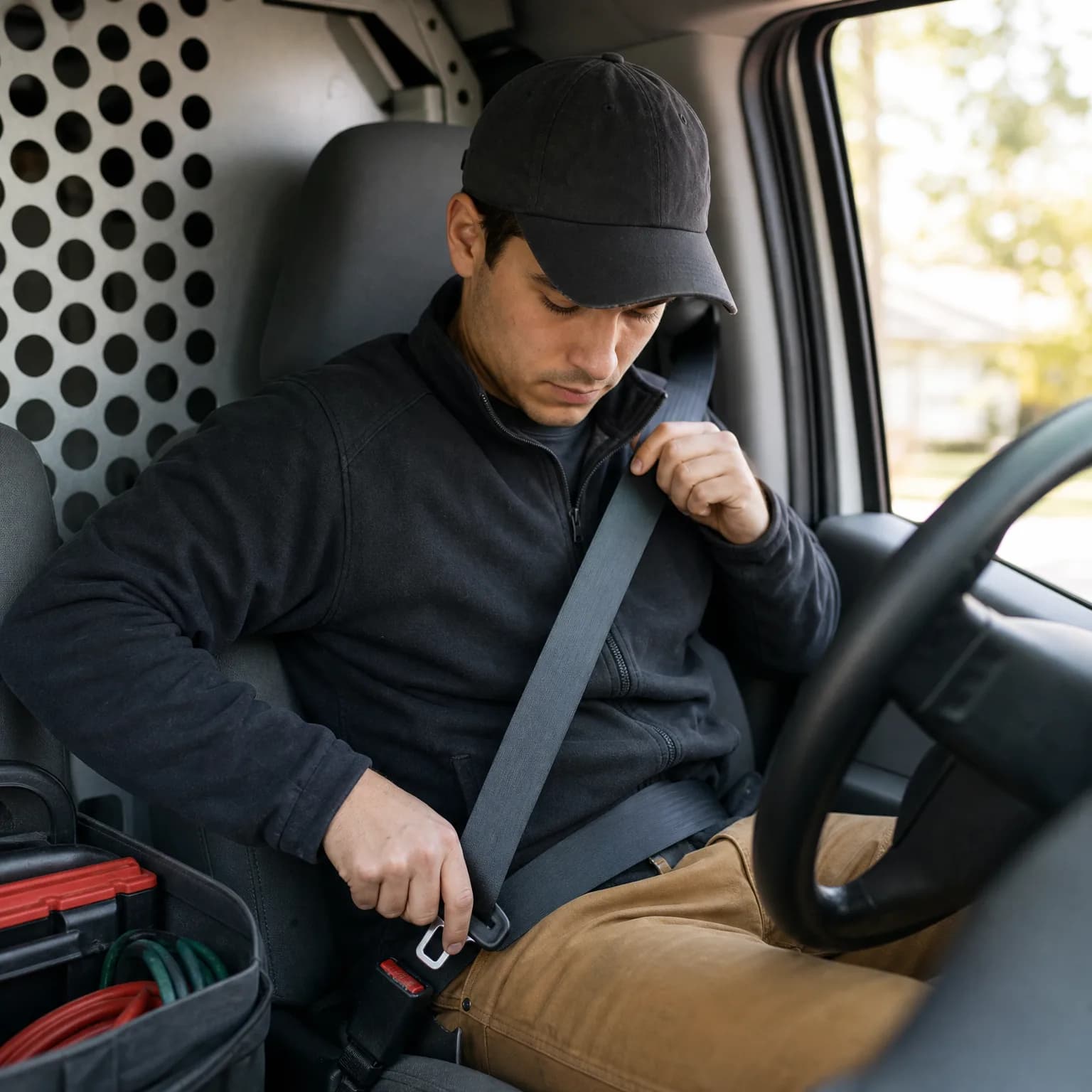
Wisconsin mandates ignition interlock installation for all OWI offenders seeking an Occupational License if the offense involved a BAC of 0.15 or higher, or if this is your second or subsequent OWI within the lookback period (Wis. Stat. § 343.301). First-time offenders with BAC below 0.15 may not face IID requirement during the Occupational License period, but IID is required upon full reinstatement for 12 months if you were convicted after January 1, 2017. Costs vary: device installation runs $75 to $150, monthly monitoring fees range from $70 to $100, and removal fees are typically $50 to $75.
You must install the IID before the court will issue your Occupational License order if your case meets the statutory threshold. Choose an approved IID vendor from the Wisconsin DOT certified provider list—only devices installed by state-approved vendors satisfy the requirement. The vendor submits installation verification electronically to Wisconsin DOT. Violation of IID terms (attempting to tamper with the device, failing a rolling retest, or driving a non-equipped vehicle when IID-restricted) triggers automatic Occupational License revocation and extends your IID requirement period.
The IID monitors every engine start and conducts rolling retests while you drive. Failed starts and failed rolling retests are logged and reported monthly to Wisconsin DOT. Three failed starts in a rolling 30-day period, or one failed rolling retest, results in immediate license suspension. Wisconsin enforces absolute sobriety during any IID-restricted period: your BAC must be 0.00. Even trace alcohol from mouthwash or hand sanitizer can register as a violation.
After your full revocation period ends and you satisfy all reinstatement requirements, you remain IID-restricted for 12 months if this was a first OWI, or longer for subsequent offenses. Only when the IID period concludes and you submit proof of compliance can you obtain an unrestricted operator's license.
$200
OWI Reinstatement Fee
Wisconsin charges a $200 reinstatement fee specific to OWI-related revocations, separate from the base $60 fee for other suspension types (Wis. Admin. Code Trans 101). If you had concurrent administrative and judicial revocations, Wisconsin may assess separate fees for each action. Fees must be paid in full before reinstatement is processed.
Wis. Admin. Code Trans 101
Full Reinstatement After Revocation Period
When your 6-to-9-month revocation period expires, your driving privilege does not automatically restore. You must complete a multi-step reinstatement process before Wisconsin DOT will issue an unrestricted license. Required steps: complete all court-ordered AODA assessment and any recommended treatment programs, pay the $200 OWI-specific reinstatement fee plus $60 base reinstatement fee (total $260 if no other suspensions are stacked), maintain continuous SR-22 filing throughout the reinstatement process, install ignition interlock device if required for your offense level, and appear in person at a Wisconsin DMV service center with proof of identity, proof of Wisconsin residency, and all completion certificates. Some counties require a new driver's knowledge test; others do not. Confirm requirements with your local DMV service center before your reinstatement appointment.
If you held an Occupational License during your revocation period, it expires automatically when your full revocation period ends. You cannot drive—even for the purposes allowed under your Occupational License—until you complete full reinstatement. Plan for a gap between Occupational License expiration and reinstatement appointment. Wisconsin DOT does not process same-day reinstatements for OWI cases; expect 3 to 7 business days after you submit all documents and fees before your driving privilege is restored in the state system. During that window you remain revoked.
Get SR-22 Coverage Now
SR-22 filing is the first procedural gate in Wisconsin's OWI reinstatement pathway. You need it to petition for an Occupational License, you need it to reinstate after your revocation period, and you need it continuously on file for 3 years after reinstatement or Wisconsin DOT will re-suspend your privilege immediately. Carriers writing SR-22 policies in Wisconsin include State Farm, GEICO, Progressive, Dairyland, Bristol West, National General, The General, GAINSCO, and USAA. Not all write high-risk policies post-OWI; call for quotes. Non-owner SR-22 policies are available if you do not own a vehicle but need to satisfy the SR-22 requirement. Compare rates now—coverage must be active before your Occupational License petition or reinstatement appointment.
Occupational License Petition Process
You file your Occupational License petition in the circuit court of the county where you were convicted. The petition must include: completed Wisconsin DOT form MV3001 (Occupational License Application), proof of SR-22 insurance filing, proof of employment or other essential need (work schedule letter from employer, school enrollment verification, medical appointment documentation, or church membership letter), completion certificate from an approved AODA assessment, and payment of the court filing fee (typically $175 but varies by county). If your OWI involved a BAC of 0.15 or higher, or if this is a second or subsequent offense, you must also provide proof of ignition interlock device installation before the court will grant the license.
The court sets your driving restrictions in the order granting the Occupational License. Wisconsin courts have full discretion to define the specific hours, routes, and purposes allowed. Most orders limit driving to employment, education, medical treatment, religious worship, and court-ordered alcohol or drug treatment programs. The court typically restricts you to no more than 12 hours per day and 60 hours per week total. Once the court issues the order, you take it to a Wisconsin DMV service center to receive the actual Occupational License document. The physical license costs an additional $28 issuance fee. Your Occupational License remains valid until your full revocation period ends, at which point you begin the reinstatement process.
Get Your Free Quote
Get My Wisconsin DUI Insurance QuoteFrequently Asked Questions
Can I get an Occupational License immediately after my OWI conviction in Wisconsin?
No. Wisconsin imposes a mandatory 30-day hard suspension period for first OWI before you are eligible to petition for an Occupational License. The 30 days run from the effective date of your revocation notice, not from your conviction date. You must also hold an active SR-22 certificate before filing your petition.
How much does SR-22 insurance cost after an OWI in Wisconsin?
Monthly premiums for SR-22 insurance in Wisconsin after OWI typically range from $140 to $280 for owner-operator policies and $95 to $185 for non-owner policies. Rates vary by county, age, prior insurance history, and whether you carry collision or comprehensive coverage. Expect higher premiums in Milwaukee, Dane, and Waukesha counties.
What happens if my SR-22 insurance lapses during my 3-year filing period?
Your carrier notifies Wisconsin DOT electronically within 24 hours of any SR-22 lapse. DOT immediately re-suspends your operating privilege. You must obtain new SR-22 coverage, pay a new $60 reinstatement fee for each suspended action, and your 3-year SR-22 filing period restarts from the date you reinstate.
Do I need an ignition interlock device for my first OWI in Wisconsin?
It depends on your BAC. If your BAC was 0.15 or higher at the time of arrest, Wisconsin requires ignition interlock installation before you can obtain an Occupational License and for 12 months after full reinstatement. First offenders with BAC below 0.15 may not need IID during the Occupational License period but face IID requirement upon reinstatement if convicted after January 1, 2017.
Can I drive out of state with a Wisconsin Occupational License?
No. Wisconsin Occupational Licenses are valid only within Wisconsin and only for the specific purposes, hours, and routes defined in your court order. Driving outside Wisconsin or outside your approved restrictions violates the terms of your Occupational License and results in revocation. Other states do not recognize Wisconsin's Occupational License as a valid operator's license.
How long does the SR-22 filing requirement last after an OWI in Wisconsin?
Wisconsin requires SR-22 filing for 3 years following reinstatement of your operating privilege after OWI. The 3-year period begins on your reinstatement date, not your conviction date or filing date. Any lapse in SR-22 coverage during those 3 years restarts the clock.