
Cheapest Insurance After Second OWI — Wisconsin
Free to compare
Second OWI Conviction Narrows Your Carrier Pool
You received your second OWI conviction in Wisconsin within the ten-year lookback window. Your license is revoked for 12 to 18 months. When you checked online for quotes, the big-name carriers either declined to quote or returned rates that made no sense compared to what you paid before. The issue is not that insurance disappeared—it is that your pool of available carriers contracted sharply, and the ones left standing price second-OWI risk very differently.
Wisconsin requires SR-22 filing for three years after second OWI reinstatement. Most standard-tier carriers (State Farm, Allstate, American Family) either decline high-risk applicants outright or price them into the non-standard market. The carriers writing second-OWI policies in Wisconsin—Geico, Progressive, Dairyland, Bristol West, The General, GAINSCO, National General—quote rates ranging from $180 to $340 per month for the same coverage limits. That $160-per-month spread is why comparing carriers after a second OWI is not optional.
“The three-year SR-22 clock resets entirely if your coverage lapses for any reason—there is no partial credit for time already served.”

Get Back to a Fair Rate in Wisconsin After a DUI
Get My Wisconsin DUI Insurance Quote$200
WI Second OWI Reinstatement Fee
Wisconsin assesses a $200 reinstatement fee for second OWI convictions, separate from and in addition to SR-22 filing costs, court fines, and ignition interlock installation. The fee is due before the DMV will restore your operating privilege.
Wisconsin Department of Transportation
SR-22 Requirement Lasts Three Years From Reinstatement
Wisconsin's SR-22 filing requirement for second OWI convictions runs for three years from the date your license is reinstated, not from your conviction date or the end of your revocation period. The clock does not start until WisDOT restores your operating privilege. If your revocation lasts 18 months and you wait another six months to file for reinstatement, the three-year SR-22 period begins at reinstatement—two years after your conviction.
The three-year clock resets entirely if your SR-22 coverage lapses for any reason. Wisconsin's electronic insurance verification system notifies WisDOT immediately when a carrier cancels an SR-22 policy. If you miss a premium payment and the carrier drops you, WisDOT suspends your license and the three-year SR-22 requirement restarts from zero when you reinstate again. There is no grace period and no partial credit for time already served under SR-22. This is the structural reality that makes carrier reliability and payment automation critical—not optional conveniences.
Most suspended drivers compare standard-tier carriers that will not write them. The cheapest second-OWI policy comes from a non-standard carrier you probably have not heard of.
Related Articles





Ignition Interlock Adds $75 to $120 Per Month
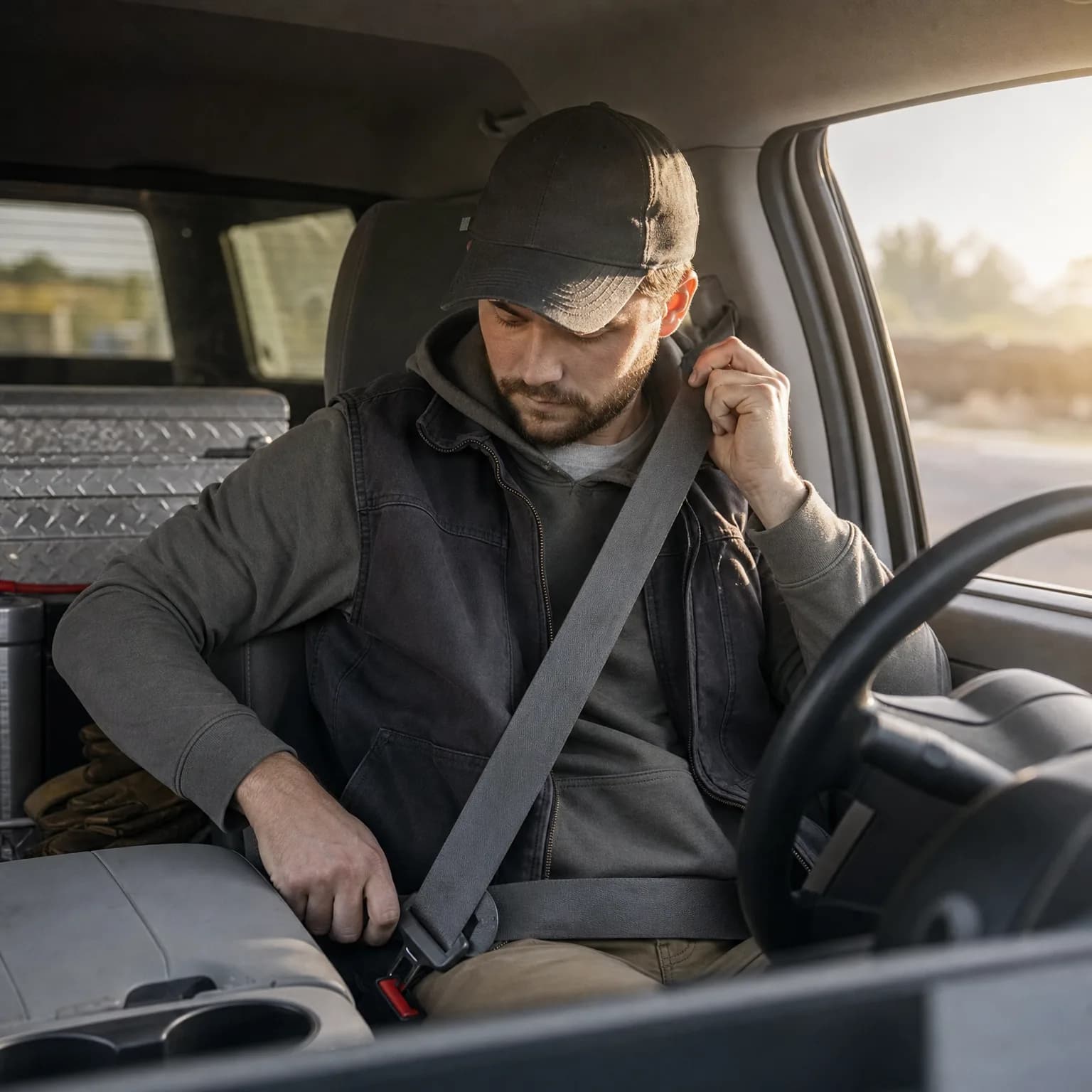
Wisconsin mandates ignition interlock device installation for all second OWI convictions under Wis. Stat. § 343.301. The IID requirement runs for 12 to 18 months depending on your BAC at arrest and whether you refused testing. Installation costs $75 to $150; monthly monitoring and calibration fees run $75 to $120. These costs are separate from your insurance premium and are paid directly to the IID vendor, not your carrier.
Your occupational license (if granted during revocation) and your reinstated full license both require IID compliance. Violating IID terms—failing a rolling retest, attempting to bypass the device, missing a calibration appointment—triggers automatic license re-suspension and extends your IID period. WisDOT receives real-time violation reports from IID vendors. The structural consequence: IID non-compliance does not just affect your license, it invalidates your SR-22 filing because you are no longer legally eligible to drive, which lapses your coverage requirement and resets your three-year SR-22 clock.
12–18 months
Wisconsin Second OWI Revocation Period
Wisconsin revokes your license for 12 to 18 months after a second OWI conviction within ten years. The specific duration depends on your BAC at arrest, whether you refused testing, and whether aggravating factors applied. You may apply for an occupational license after serving a 90-day hard suspension.
Wis. Stat. § 343.10(5)(b)

Occupational License Requires SR-22 During Revocation
Wisconsin allows second-OWI offenders to apply for an occupational license after serving a 90-day hard suspension period. The occupational license is not automatic—you petition the circuit court, demonstrate essential need (work, school, medical appointments, AODA treatment), and provide proof of SR-22 insurance filing before the court will issue an order. Once the court grants the order, you take it to a Wisconsin DMV office to receive the physical occupational license document.
The occupational license is valid only for the specific hours, routes, and purposes the court defines in its order. Driving outside those restrictions—using the license for grocery shopping when the order limits you to work and AODA classes—is operating while revoked, a criminal offense that extends your revocation period and may disqualify you from full reinstatement. Your SR-22 insurance must remain active throughout the entire occupational license period and the subsequent three years after full reinstatement. Letting it lapse at any point restarts the clock and requires a new court petition for a new occupational license.
Compare Non-Standard Carriers Before You Reinstate
The window to compare carriers is before reinstatement, not after. Once you pay the $200 reinstatement fee and file SR-22, switching carriers mid-term is possible but introduces lapse risk—the old carrier cancels, the new carrier has not filed yet, and WisDOT receives a lapse notification that suspends your license again. The structural path is: obtain quotes from at least three non-standard carriers (Dairyland, Bristol West, Geico high-risk, Progressive non-standard), select the one with the lowest monthly rate and best payment flexibility, lock the policy, then request SR-22 filing before you apply for reinstatement or occupational license.
Wisconsin carriers that write second-OWI policies all file SR-22 electronically with WisDOT—there is no paper-certificate option. The filing itself costs $25 to $50 depending on carrier. Your premium includes the high-risk underwriting surcharge, not the SR-22 filing fee; that is billed separately at policy inception. Expect total first-month cost of $250 to $390 (premium plus SR-22 fee plus prorated setup). Month two onward drops to the base monthly premium. Set up automatic payment from a checking account, not a debit card—debit card expirations and issuer declines are the most common cause of unintentional SR-22 lapse among second-OWI drivers in Wisconsin.
Carriers Writing Second OWI Policies in Wisconsin
Geico, Progressive, and National General write second-OWI policies in Wisconsin and return online quotes. Geico's high-risk tier typically prices $210–$280 per month for state minimum liability plus SR-22. Progressive quotes $190–$310 depending on county, age, and time since conviction. National General operates in the standard-to-nonstandard bridge and quotes $200–$290. All three file SR-22 electronically and support monthly payment plans.
Dairyland, Bristol West, The General, and GAINSCO specialize in non-standard auto and write second-OWI policies across Wisconsin. Dairyland quotes $180–$260 per month and operates entirely in the high-risk space—no standard-tier business. Bristol West and The General quote $220–$340 depending on county and prior claims. GAINSCO entered Wisconsin in 2021 and quotes $195–$275. These four require phone or broker contact for final quotes but often underprice the online carriers for drivers with clean records aside from the OWI convictions.
Get Your Free Quote
Get My Wisconsin DUI Insurance QuoteFrequently Asked Questions
How much does SR-22 insurance cost after a second OWI in Wisconsin?
SR-22 insurance after a second OWI in Wisconsin typically costs $180 to $340 per month depending on carrier, county, age, and time since conviction. The SR-22 filing fee itself is $25 to $50, paid once at policy inception. Rates vary significantly between non-standard carriers—Dairyland and GAINSCO often quote $180 to $260, while Bristol West and The General quote $220 to $340 for identical coverage.
Can I get an occupational license immediately after a second OWI in Wisconsin?
No. Wisconsin imposes a mandatory 90-day hard suspension before you are eligible to petition the court for an occupational license after a second OWI conviction. You must serve the full 90 days with no driving privileges, then file a petition with the circuit court demonstrating essential need and proof of SR-22 insurance. The court decides whether to grant the occupational license and defines the specific hours and purposes you may drive.
What happens if my SR-22 insurance lapses during my three-year requirement?
Wisconsin's electronic insurance verification system notifies WisDOT immediately when your SR-22 coverage lapses. WisDOT suspends your license the same day it receives the lapse notification. Your three-year SR-22 requirement resets entirely—you receive no credit for time already served. To reinstate after a lapse, you must obtain new SR-22 coverage, pay another reinstatement fee, and restart the three-year clock from zero.
Do I need SR-22 insurance if I do not own a car after a second OWI?
Yes. Wisconsin requires SR-22 filing for three years after second OWI reinstatement regardless of vehicle ownership. If you do not own a car, you need a non-owner SR-22 policy. Non-owner policies provide liability coverage when you drive a borrowed or rental vehicle and satisfy Wisconsin's SR-22 filing requirement. Geico, Progressive, Dairyland, and The General all write non-owner SR-22 policies in Wisconsin, typically at $80 to $150 per month.
Which carriers write the cheapest second OWI insurance in Wisconsin?
Dairyland and GAINSCO typically quote the lowest rates for second OWI insurance in Wisconsin, ranging from $180 to $260 per month for state minimum liability plus SR-22. Geico and Progressive quote $190 to $310 depending on county and underwriting factors. The General and Bristol West quote $220 to $340. Rates vary by age, county, time since conviction, and prior claims—compare at least three non-standard carriers before selecting a policy.
How long does the ignition interlock requirement last after a second OWI in Wisconsin?
Wisconsin requires ignition interlock installation for 12 to 18 months after a second OWI conviction, depending on your BAC at arrest and whether you refused testing. The IID requirement applies to both occupational licenses (if granted during revocation) and your reinstated full license. Monthly monitoring and calibration fees run $75 to $120, paid directly to the IID vendor. Violating IID terms extends the requirement and triggers license re-suspension.